
Relief embossing is widely used to enhance tactile quality and brand presence. However, one common concern in production is post-embossing distortion—such as paper warping, excessive backside show-through, or softened edges. Below are practical observations to help maintain dimensional clarity without compromising structural stability.
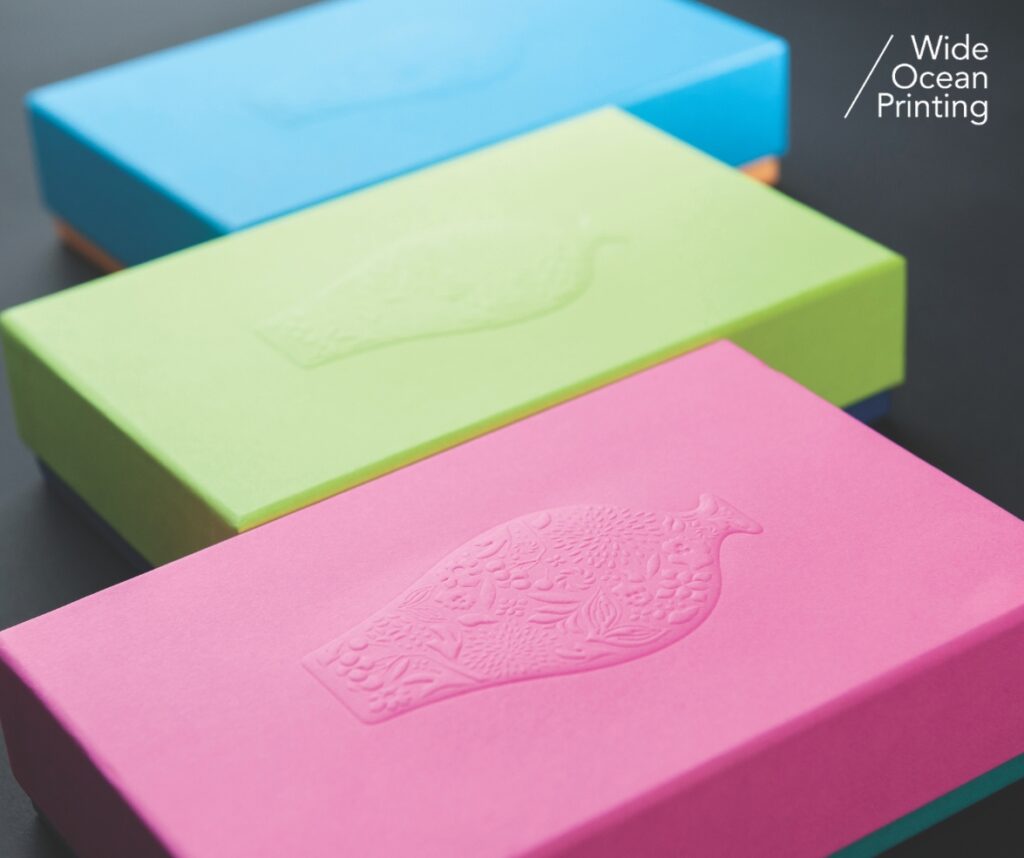
💡 Why does paper warp?
When pressure is applied, paper fibers shift and compress. If the stock is too thin or moisture content is uneven, the sheet may bend or ripple. Using heavier stocks (250gsm and above) and maintaining stable humidity conditions can significantly improve stability.
💡 Is deeper embossing always better?
Greater depth does not necessarily equal better results. Excessive pressure may damage fibers or create overly pronounced impressions on the reverse side. Balanced pressure and accurate tooling allow the raised form to appear refined rather than forced.
💡 Why do edges lose definition?
Extremely fine details or tight spacing may distort under pressure. Providing sufficient line thickness and spacing during the design stage helps preserve crisp contours after embossing.
✨ Practical Tips
🔹 Align the embossing direction with paper grain whenever possible.
🔹 Maintain clearance from folds and die-cuts to prevent stress concentration.
🔹 Conduct proofing to compare pressure levels and front/back appearance.
🔹 For larger embossed areas, consider segmenting the design to distribute pressure more evenly.
✨ Conclusion
The elegance of relief embossing lies in controlled dimension. By carefully balancing material selection, pressure, and design precision, embossed elements can enhance texture and identity without compromising flatness or durability.
“Every design deserves the right finishing.”
Reach out to our team for
tailored recommendations, sample references, and accurate cost estimates.