
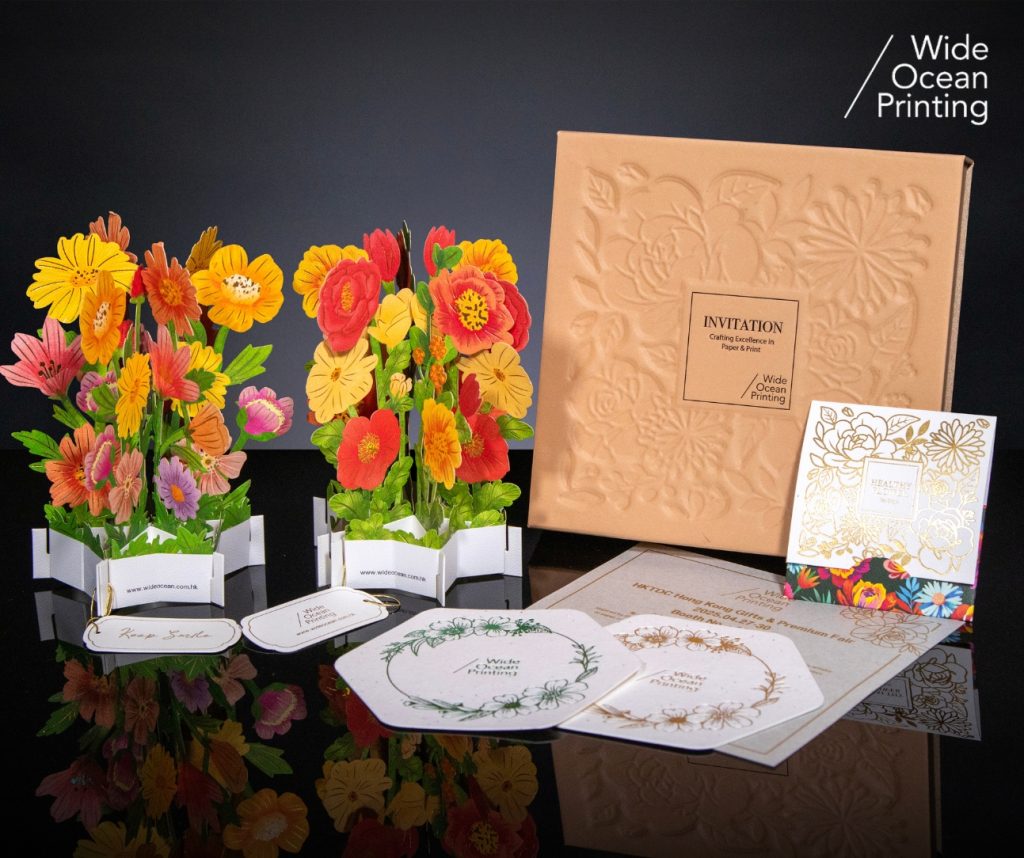
Debossing is a refined finishing technique that creates recessed impressions, widely used in premium packaging, book covers, and brand identity applications. Unlike embossing, which raises the design, debossing presses artwork into the surface – producing a subtle, elegant tactile experience. Here’s a look behind the scenes.
🛠️ 1|Die Making: Where Precision Begins
Metal dies (zinc or brass) are engraved according to artwork specifications. Depth, edge angles, and contour transitions must be controlled meticulously to prevent cracking and ensure crisp impressions.
📄 2|Paper Conditioning: Structure Shapes the Result
Paper thickness, fiber strength, and moisture levels determine the final outcome. Uncoated stocks, cotton paper, or textured papers deliver deeper impressions. Sheets are conditioned to match ambient humidity before production.
⚙️ 3|On-Press Debossing: Pressure in Perfect Balance
Debossing relies on calibrated pressure and precise registration. Operators use makeready adjustments to distribute force evenly. Samples are checked throughout the run to ensure consistency and prevent excessive show-through.
💨 4|Drying & Stabilizing: Securing the Shape
Post-press, sheets rest or undergo warm-air drying to stabilize fibers. This prevents deformation during subsequent processes such as lamination, foiling, or folding.
✨ 5|Quality Inspection: Details Define the Craft
Key checkpoints include:
✔ Even, stable depth
✔ Sharp edges and clean contours
✔ Minimal reverse marking
✔ Accurate alignment with other print or foil elements
Every flawless deboss is the result of skill, calibration, and patience.
🌟 Conclusion
Debossing is understated yet powerful. Combining precise die making, disciplined presswork, and rigorous inspection, it elevates printed materials with depth and sophistication – quietly expressing brand quality.
“Every design deserves the right finishing.”
Reach out to our team for
tailored recommendations, sample references, and accurate cost estimates.