
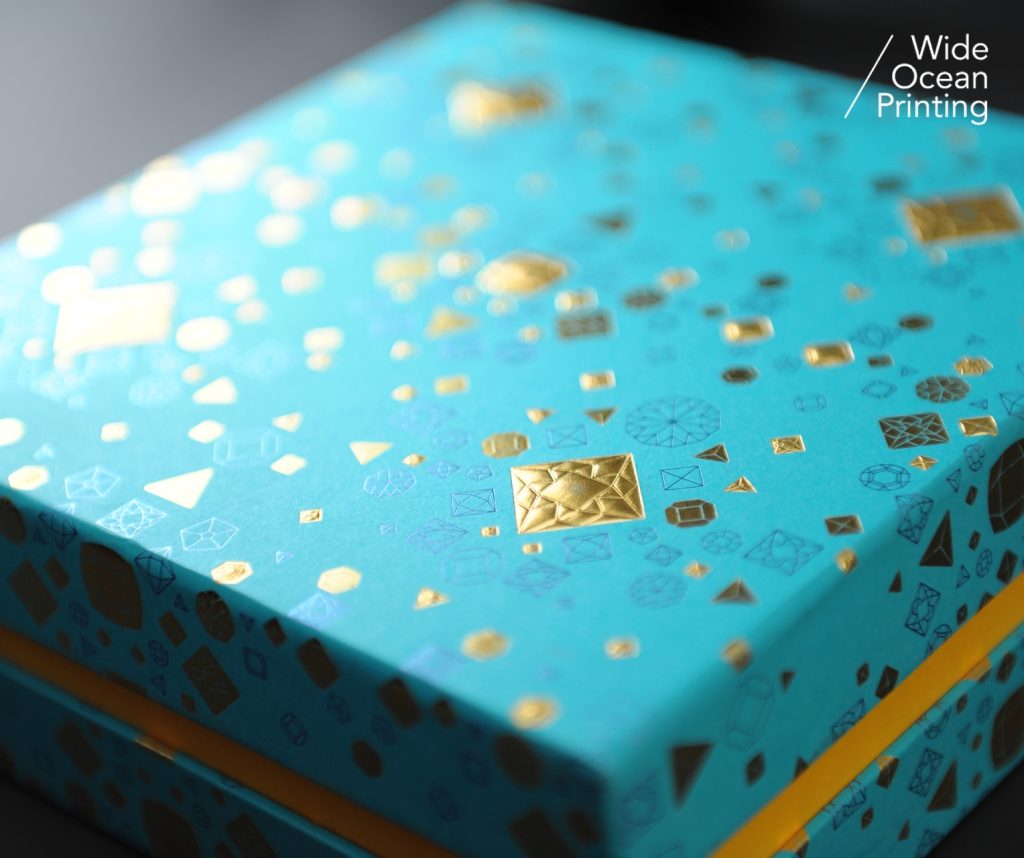
The crisp, dimensional relief you see on premium print is the result of a tightly choreographed setup. Here’s a peek behind the scenes of embossing – from dies and paper to press parameters.
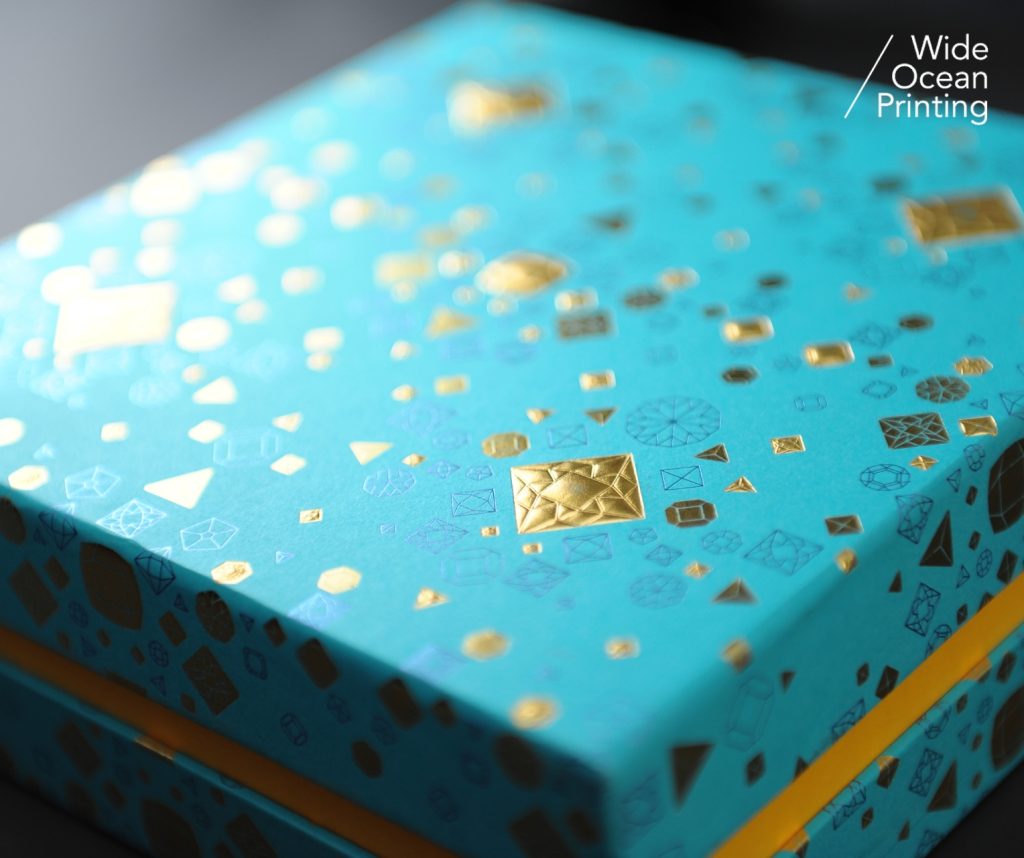
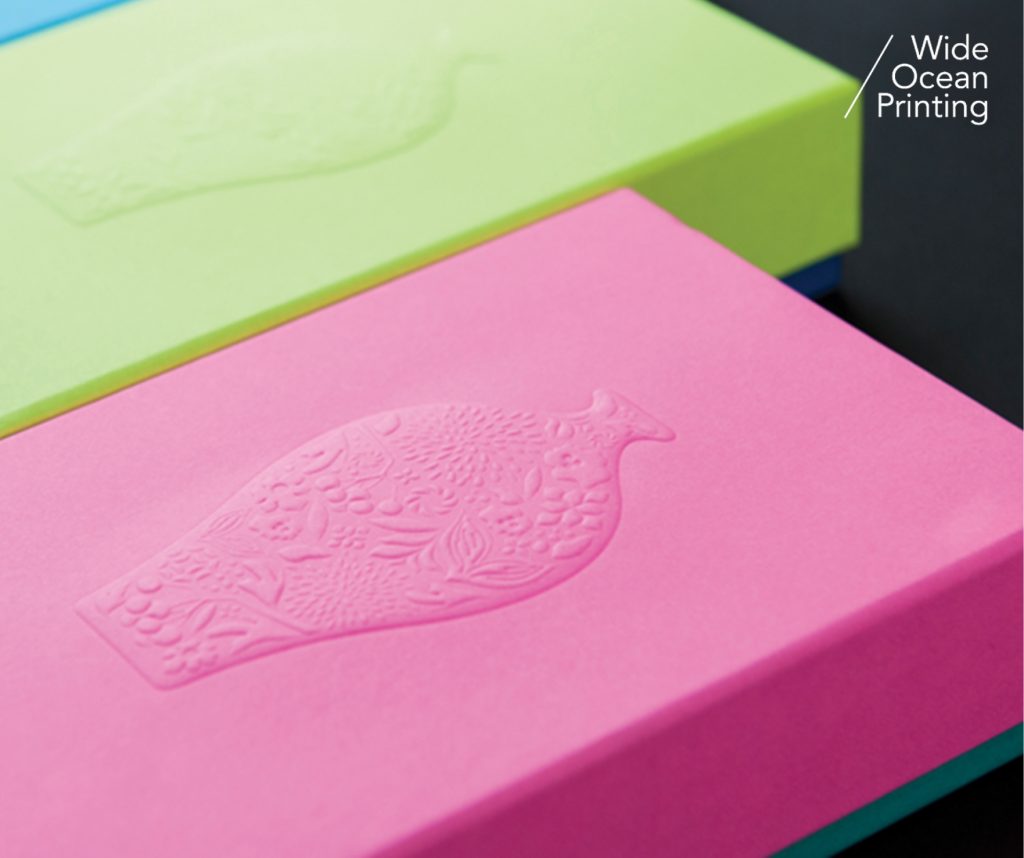
🔎 1 | Dies: the language of relief
Embossing lives and dies by the tool. Common materials include magnesium (fast heat transfer), zinc (durability), and brass (ideal for multi-level or sculpted work). Counters are typically phenolic or resin to ensure even pressure. Edge profiles – round, bevel, or sharp – shape the highlight, shadow, and tactile feel.
🔎 2 | Paper & moisture balance
Long, resilient fibers yield cleaner relief. Cotton stocks, heavy uncoated papers, and art papers are go-tos. Operators measure moisture and allow sheets to acclimate so fibers deform without cracking during pressure and heat.
🔎 3 | Registration
When embossing must register to CMYK or foil, makeready starts with precise marks and micro-adjustments. Tight designs push tolerances toward ±0.1 – 0.2 mm, demanding both stock stability and press accuracy.
🔎 4 | The triad: temperature, pressure, dwell
Heat helps fibers “remember” shape; too little heat fails to form, too much causes shine or burnishing. Insufficient pressure gives shallow relief; too much imprints on the reverse. Dwell time fills the profile. Operators iterate test-pulls and makeready shims to equalize pressure across the form.
🔎 5 | Depth & finishing combos
Beyond single-level, multi-level and sculpted emboss add contour. Combinations like emboss + foil are common. If the sheet is laminated (matte or soft-touch), adhesion and stretch must be tested to prevent wrinkling or cracking under load.
🔎 6 | Quality control at scale
Side-lighting reveals burrs, collapse, or show-through. Crews sample at set intervals (e.g., every 100 – 200 sheets), monitor thickness variation and registration, and pack flat with interleaves to avoid rebound or marking.
🔎 7 | Collaboration
Great embossing happens when designers, die makers, and press operators speak the same language: vector art with edge notes, robust tooling, and parameter discipline. Align those, and the light and shadow simply click.
“Every design deserves the right finishing.”
Reach out to our team for
tailored recommendations, sample references, and accurate cost estimates.